














After a long, wet British winter, your patio has likely taken a beating. From slippery green algae to stubborn black spots and sprouting weeds, a neglected patio isn’t just an eyesore—it's a genuine slip hazard. This practical guide covers everything from simple daily upkeep to deep-cleaning methods, helping you choose the right approach for your specific paving and local conditions.
Key Takeaways
Deep clean your patio twice a year (spring and autumn) to remove organic growth and prevent damage.
Use a pressure washer with a fan nozzle, keeping a 12-18 inch distance to avoid harming paving or joints.
Identify whether you have moss, algae or lichen—standard cleaners won't remove embedded lichen.
Avoid white vinegar on calcareous stones like limestone or sandstone, as it causes etching.
Rinse off all cleaning residues thoroughly to prevent a dull, discoloured finish.
How to Know Your Patio Needs Cleaning (Key Signs & Seasonal Timing)
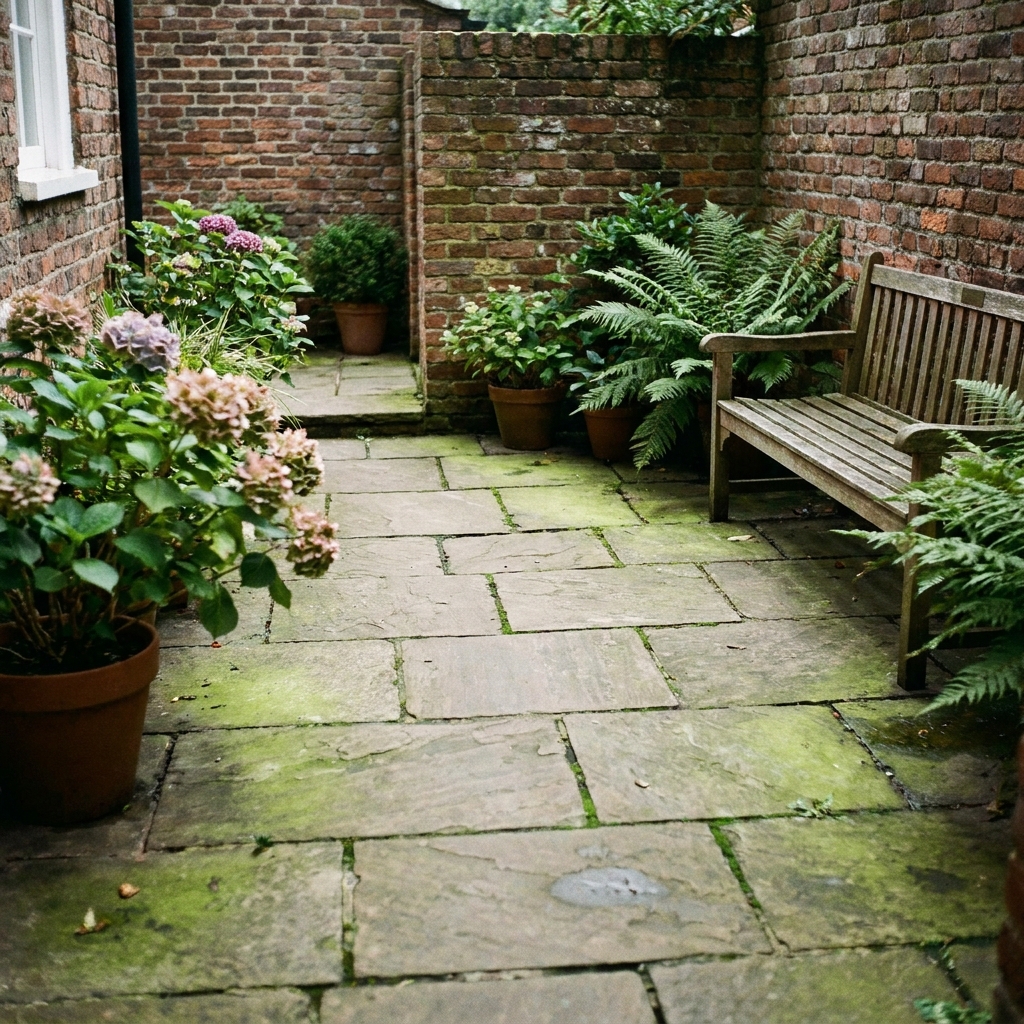
Given the UK's damp climate, certain clear signs appear long before the surface becomes dangerous. Look for a dark, slimy film that feels slick underfoot (that's algae), raised green cushions in the joints (moss), or flat, crusty black spots that won't scrub off (lichen). If your patio furniture, such as a patio table has green staining on its legs or feet, that's another strong clue that the whole area needs a clean.
The best time to act is during a stable dry spell with temperatures consistently above 10°C, ideally once in spring to remove winter grime and again in autumn to clear fallen leaves before they cause "tea-staining" black spots.
What Essential Tools You'll Need for Cleaning a Patio
Having the right tools prevents damage and saves effort. What you need depends on the job.
Basic Hand Tools for Weekly Care:
A stiff-bristled outdoor broom: For weekly sweeping to prevent dirt compaction.
A patio scrubber or stiff brush: For scrubbing with cleaning solutions.
A joint scraper or old knife: For digging weeds and moss from cracks.
Bucket, biodegradable detergent & garden hose: For general washing.
For Deep Cleaning: Power Tools & Solutions
For ingrained dirt, moss, and lichen, mechanical cleaning is most effective.
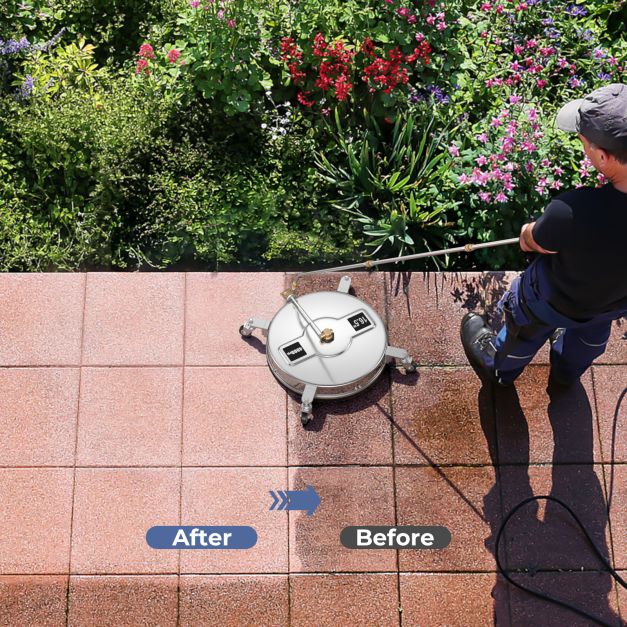
A Pressure Washer: An electric model with adjustable pressure (1500-2500 PSI is ideal for most paving) is key. Always use a 25-40 degree fan nozzle to spread pressure and avoid etching the stone. Tip: Maintain a 12-18 inch (30-45 cm) distance and hold at a shallow angle to protect pointing sand. If you are looking for a reliable machine, the Costway Pressure Washer offers up to 2,400 PSI with four universal wheels for great stability across your whole garden.
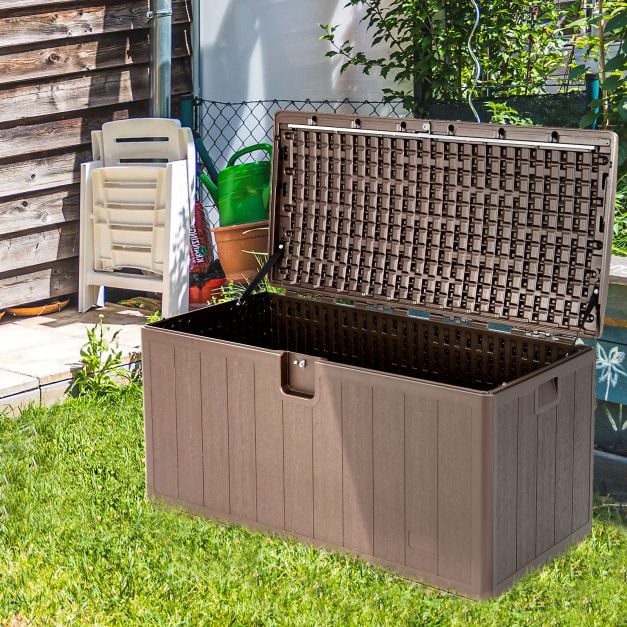
Garden Storage Box: When the cleaning is done, keeping your equipment safe and dry is just as important. Costway Garden Storage Deck Box with Lockable Cover is great to neatly store your pressure washer, hose, and chemicals out of reach from children and pets. A designated storage box extends the life of your tools by protecting them from frost and moisture, ensuring your patio stays clean year after year.
Targeted Cleaning Solutions: For biological growth, a dedicated patio biocide or alkaline cleaner is more effective and longer-lasting than DIY mixes. Keep a bag of kiln-dried sand handy for re-pointing joints afterwards.
How to Clean a Patio: 4 Proven Methods
Depending on how dirty your patio is, choose one of these four approaches—from light maintenance to full restoration.
Method 1: Daily & Weekly Maintenance (The Effort‑Saver)
A weekly sweep with a stiff broom removes leaves, soil, and grass clippings before they decompose and stain the stone. In shady spots that rarely see the sun, regular brushing disrupts moss and algae spores, slowing regrowth significantly. This five‑minute habit also stops dirt from being tracked onto your patio table and chairs, keeping your outdoor dining area cleaner between deep cleans.
Method 2 : Natural Cleaning with Soapy Water (For Light, General Dirt)
Mix a squirt of biodegradable washing‑up liquid into a bucket of warm water. Using a stiff brush, scrub the slabs in sections, then rinse thoroughly with a garden hose. This method is ideal for patios that look dull but don't have heavy green growth. Important: avoid letting soapy water run into planted borders or rainwater drains. Biodegradable detergents are best, and they won't harm your pets if they walk on the damp surface afterwards.
Method 3: Spot Treatment for Stubborn Organic Stains (Algae & Moss Patches)
When you see localised algae or moss patches, a targeted treatment can work well. For robust slabs (concrete, porcelain), a diluted white vinegar solution (1:1 with water) can be applied, left for 30–60 minutes, then scrubbed and rinsed. Major warning: never use vinegar on limestone, sandstone, York stone or any other calcareous stone—the acid will etch the surface permanently. Also prevent runoff, as it harms plants and soil biology.
A safer, more effective alternative for all stone types is a dedicated patio cleaner or a paste made from bicarbonate of soda. Apply the paste to the stain, leave it overnight, then scrub off. This method is particularly kind to the pointing sand and won’t discolour your slabs. For best results, treat spots as soon as you see them—especially around the legs of your patio furniture, where moisture collects and algae loves to start.
Method 4: Deep Cleaning with a Pressure Washer (For Heavy Grime & Full Restoration)
This is the fastest way to restore a heavily soiled patio—the method that brings a neglected surface back to life. Follow these steps carefully:
Clear the area completely. Remove all furniture, pots and toys.
Sweep away loose debris. Use your stiff broom to remove leaves and grit so they don’t become projectiles under the pressure washer.
Pre‑treat heavy organic growth. Apply a specialist patio biocide or algae remover according to the product instructions. Let it dwell for 10–15 minutes (but don't let it dry).
Set up your pressure washer. Attach a 25–40 degree fan nozzle. Set the pressure to medium (around 1,800–2,000 PSI for most UK paving).
Start from the highest point and work downwards, using slow, overlapping strokes. Keep the nozzle moving to prevent streaks. Hold the lance at a 30–45 degree angle and maintain a 12–18 inch distance.
Rinse thoroughly with clean water from the hose (or switch to the lowest pressure setting).
Allow the patio to dry completely (at least 24 hours in good weather). Once dry, inspect the joints. If any sand has washed out, brush in fresh kiln‑dried sand to re‑point the gaps.
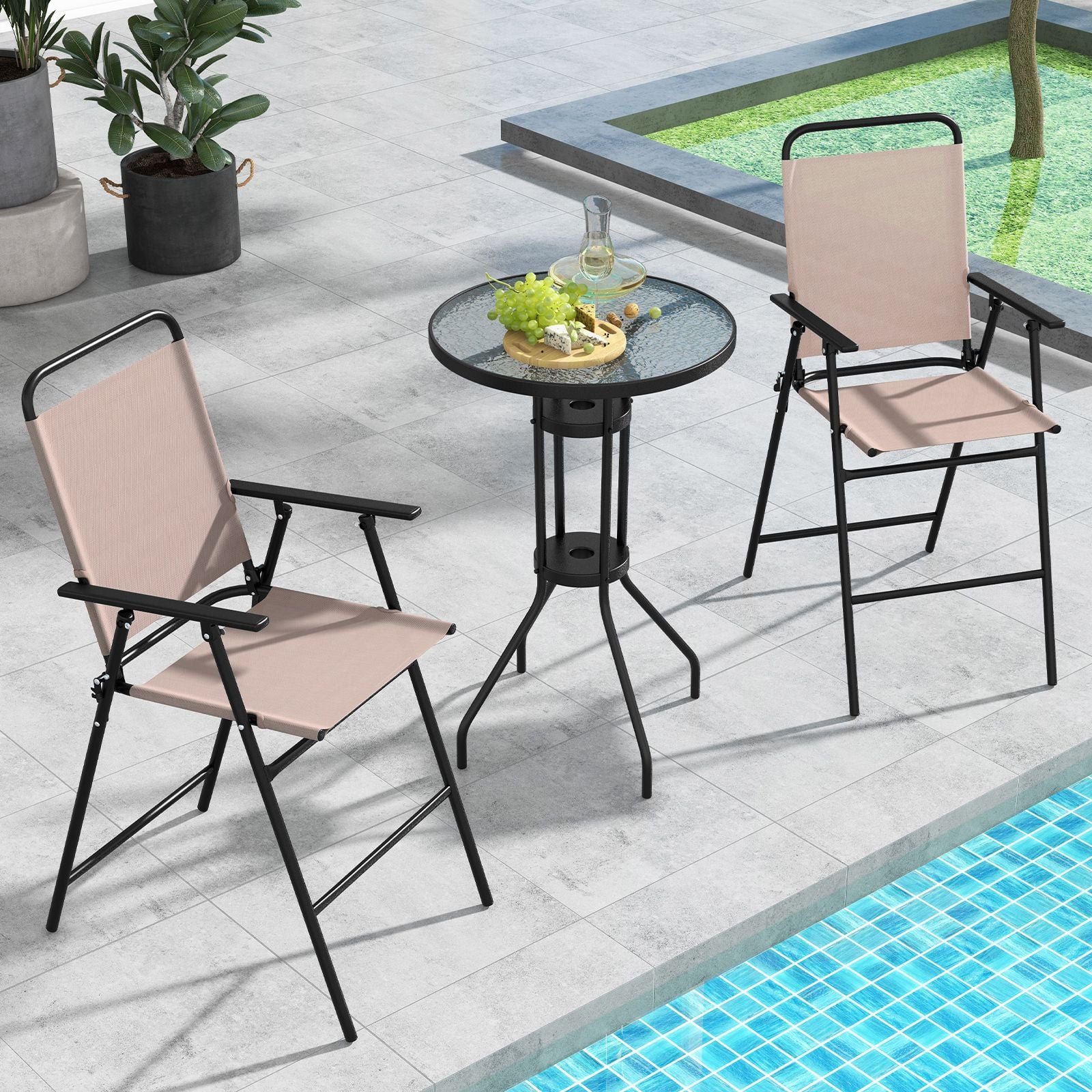
Finally, give your furniture a quick rinse before returning it to the clean surface. A deep‑cleaned patio paired with a tidy Costway patio furniture sets transforms your outdoor space ready for summer.
How to Remove Moss, Algae and Black Spots
Tackle these nuisances by correctly identifying them.
Removing Moss: For small patches, a joint scraper is effective. For larger areas, apply a dedicated moss killer or patio biocide.
Removing Algae: Pressure washing is very effective. For a non-machine approach, wet the area, sprinkle soda crystals, add a little dish soap, scrub, and leave for several hours before rinsing. Improving sunlight and airflow to the area helps prevent recurrence.
Removing Black Spots (Lichen): You need a specialist alkaline or biocide cleaner formulated for lichen. Apply as directed, leave for the recommended dwell time (often several hours), then scrub and rinse. Always test any chemical on a small, hidden area first.
Common Patio Cleaning Mistakes to Avoid
Even with good intentions, several common errors can permanently damage your paving. Overusing high pressure blasts away jointing sand and erodes soft stone, while harsh acids like bleach or vinegar etch calcareous surfaces (limestone, sandstone, York stone) and harm garden borders. Avoid viral “hacks” such as cola or cooking oil, which leave sticky residues that attract pests and worsen stains. Finally, always rinse thoroughly—leaving cleaning product residue to dry creates a dull, discoloured film that is difficult to remove. Stick to proven methods and test any product on a hidden area first.
Conclusion
A clean patio isn't just about good looks—it's about safety, longevity, and making the most of your outdoor space. By recognising the early signs of moss, algae or lichen, sticking to a simple weekly sweep, and scheduling two deep cleans each year, you'll keep your paving in top condition for years to come. Whether you choose a gentle soapy scrub or bring out a pressure washer for a full restoration, always protect your stone and rinse thoroughly. A well-maintained patio paired with clean, inviting patio furniture transforms your garden into a space you'll actually want to use—whatever the weather.
FAQs about How to Clean Patio
How often should I clean my patio?
You should give your patio two deep cleans per year (once in spring and once in autumn) plus a quick weekly sweep. The deep cleans remove winter grime and autumn leaf debris, while weekly sweeping prevents dirt from compacting into the stone. If you use your patio daily for dining on a rattan furniture set, a monthly spot‑clean around the table legs is also wise.
Is a pressure washer necessary?
No, a pressure washer is not strictly necessary, but it is the most efficient tool for deep‑seated grime. Light dirt, dust and minor algae can be managed with warm soapy water, a stiff brush and some elbow grease. However, if your patio has thick moss, embedded lichen or black spots that won't scrub off, a pressure washer will save you hours of backbreaking work.
How do I protect my patio after cleaning?
Once your patio is completely dry (at least 48 hours of dry weather), apply a water‑based, breathable patio sealant. This creates a protective barrier against moisture, oil and stains, making future cleaning significantly easier. Also, keep your garden storage box handy to store cushions and cleaning gear—keeping the surface free from standing water and rotting leaves is the best long‑term protection you can give your patio.
Read More:
Garden Patio Ideas: Creating A Stylish And Functional Outdoor Space