








If you're wondering whether a toy kitchen is worth buying for your child, the short answer is yes. A quality toy kitchen does far more than keep children entertained. It encourages imaginative play, supports social and language development, improves fine motor skills, and helps children practise everyday life skills in a safe environment. For toddlers and preschoolers, play kitchen sets can become one of the most-used toys in the home, offering years of educational and creative play.
Key Takeaways
Toy kitchens support creativity, communication and problem-solving skills.
Pretend cooking activities help children understand everyday routines.
Wooden toy kitchens generally offer better durability and long-term value than plastic alternatives.
The best toy kitchen depends on your child's age, available space and preferred play style.
Adding accessories and rotating play items can significantly extend play value.
What Are the Benefits of a Toy Kitchen?
A toy kitchen offers much more than simple entertainment. As one of the most popular pretend toys for toddlers and preschoolers, it helps children develop important life skills while encouraging creativity and independent play. From practising everyday routines to creating imaginative role-play scenarios, a toy kitchen supports learning and development in a fun, hands-on way.
Builds Real-World Skills
Children learn by copying what they see around them. A toy kitchen allows them to imitate cooking, cleaning, serving food and organising household items.
Through pretend play, children become familiar with everyday tasks such as:
Preparing meals
Washing dishes
Using kitchen utensils
Following simple routines
Understanding food and nutrition concepts
These experiences help bridge the gap between play and real-world learning.
Encourages Independence and Confidence
A play kitchen gives children their own space to explore, experiment and make decisions independently. Whether they're deciding what to "cook" for dinner, organising ingredients on shelves or serving imaginary customers in a pretend café, children take ownership of their play and learn to solve problems on their own.
Costway children's kitchen creates a dedicated play space where kids can safely imitate real-life activities and develop a sense of responsibility. Features such as accessible storage, realistic cooking areas and interactive accessories encourage children to make choices, follow routines and complete tasks independently.
Supports Fine Motor Development
Many kitchen activities involve small hand movements that strengthen coordination and dexterity.
Children regularly practise:
Turning knobs
Opening doors
Handling utensils
Stacking food items
Sorting accessories
These actions support the development of fine motor skills needed later for writing, drawing and self-care tasks.
Promotes Social and Language Development in Toddlers
Toy kitchens naturally encourage interaction. Children often play together by taking turns as chefs, customers or family members. During these scenarios, they learn valuable communication skills, including:
Asking questions
Following instructions
Negotiating roles
Expanding vocabulary
Expressing ideas and emotions
This makes toy kitchens particularly beneficial for toddlers developing speech and social confidence.
Encourages Imaginative Role Play
One of the biggest advantages of a toy kitchen is its ability to spark imagination.A simple wooden spoon can become a magic wand. A pretend cake can be part of a birthday celebration. Children can create endless stories and scenarios, keeping the toy engaging long after the initial excitement of receiving it.
Should You Buy a Play Kitchen for Your Toddler?
Yes, for most families, a play kitchen is a worthwhile investment. As one of the most popular pretend toys for toddlers and preschoolers, it supports creativity, social development and hands-on learning through everyday role play.
The key is choosing a kitchen that matches your child's age, available space and developmental stage. For toddlers aged 18 months to 5 years, a well-designed toy kitchen can provide daily educational play while reducing screen time.
Wooden vs Plastic Toy Kitchens: Which Offers Better Value?
For most families, wooden toy kitchens offer better long-term value than plastic models. While plastic kitchens can be more affordable and lightweight, wooden options are typically more durable, stable and designed to last through years of play.
For families looking for a toy that can grow with their child and withstand years of play, wooden kitchens generally offer better value over time.
Best Toy Kitchens for Kids (Recommended Picks)
With so many toy kitchens available, choosing the right one can feel overwhelming. The best option depends on your child's age, available space and preferred play style. To help narrow down your search, we've selected some of the best toy kitchens and accessories for different needs and budgets.
Best Overall Wooden Play Kitchen
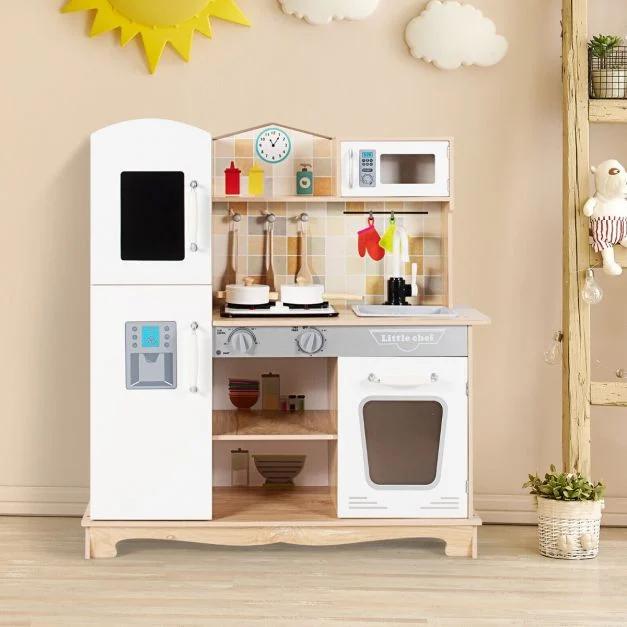
For parents looking for the best balance of durability, realism and interactive features, this Wooden Pretend Kids Play Kitchen with Light and Sound stands out. Designed to replicate a real kitchen environment, it encourages children to engage in imaginative role play while developing practical skills through everyday play scenarios.
Key features include:
Realistic light and sound effects for a more immersive play experience
Functional oven, sink and cooking area
Built-in storage shelves and cabinets to keep accessories organised
Multiple cooking accessories included for instant play
Durable wooden construction designed for long-term use
This all-in-one play kitchen combines imaginative role play with interactive features, making it an excellent long-term investment for children who love cooking and pretend play.
Best Budget-Friendly & Lightweight Option
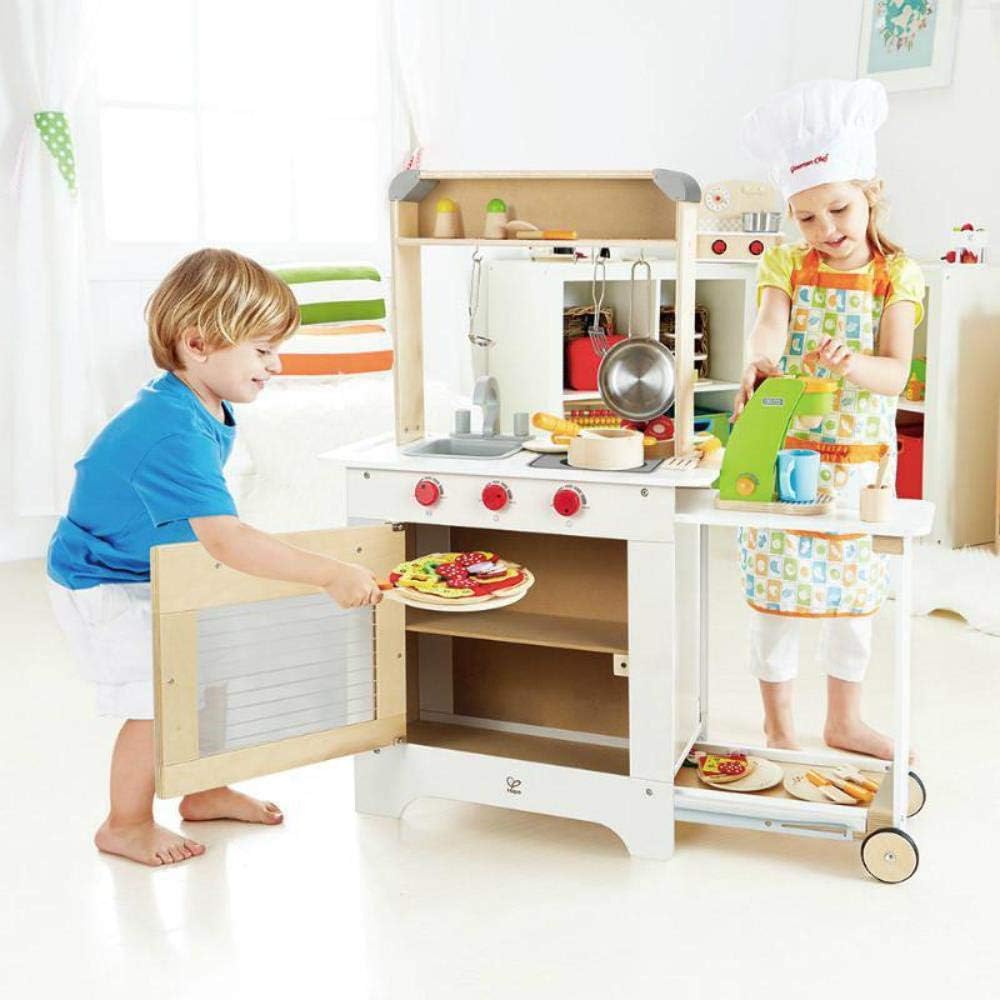
For families shopping on a tighter budget, this compact kitchen makes it particularly suitable for UK homes where space may be limited, while the simple design provides everything young children need for imaginative cooking adventures.
Benefits include:
Lightweight and easy to move between rooms
Compact design ideal for bedrooms, playrooms or smaller living spaces
Straightforward assembly with a child-friendly layout
Durable wooden construction compared with many budget plastic alternatives
Encourages role play, creativity and social interaction
Simple, practical and budget-friendly, this kitchen provides everything young children need to start exploring pretend cooking without taking up too much space.
Best Space-Saving Toy Kitchen
Space is often a concern in UK homes. This Kids Kitchen Playset Corner Play Kitchen is specifically designed to maximise play value while minimising floor space. Its clever corner layout allows children to enjoy a larger, more realistic play area without the kitchen dominating the room.
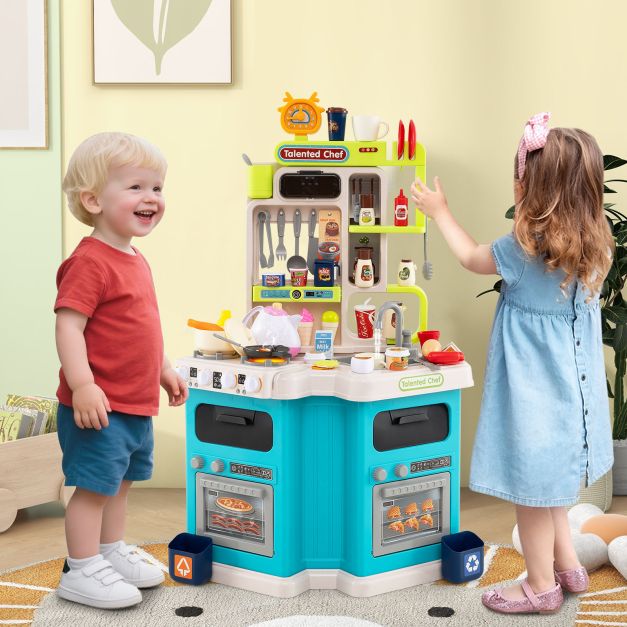
Highlights include:
Space-saving corner design that fits neatly into unused room corners
Realistic cooking sounds for a more immersive role-play experience
Interactive lighting effects that enhance imaginative play
Multiple storage compartments for toys, utensils and play food
Generous play surface despite its compact footprint
Its clever corner layout maximises play value while minimising space requirements, making it ideal for flats, bedrooms and smaller playrooms.
Best Pretend Food & Accessory Set
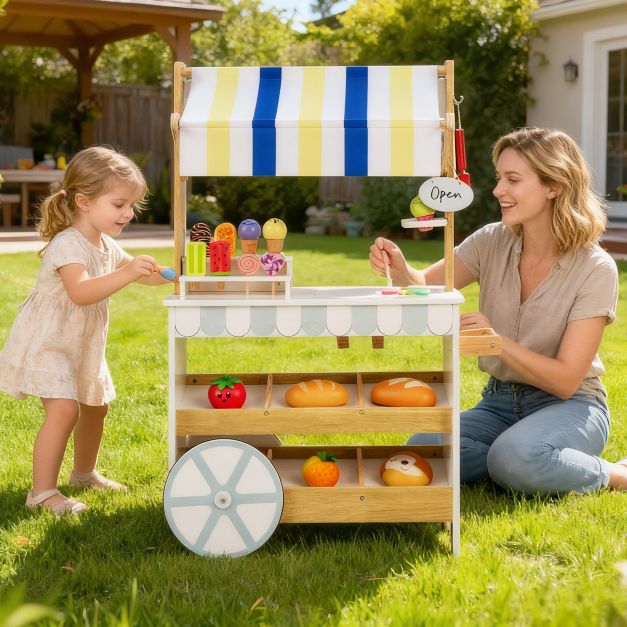
A toy kitchen becomes even more engaging when paired with creative accessories that encourage children to expand their imaginative play beyond cooking and serving meals. The 2-in-1 Wooden Ice Cream Cart is an excellent addition to any pretend play setup, offering children new ways to create stories, interact with others and explore real-world scenarios through play.
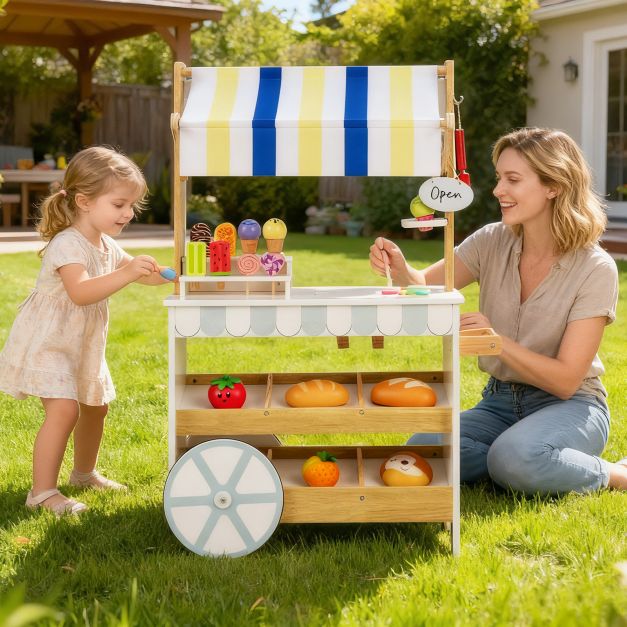
This 2-in-1 Wooden Ice Cream Cart allows children to:
Role-play running an ice cream shop or dessert stand
Organise and display pretend food items
Practise counting, sorting and basic maths skills
Develop communication and social interaction skills
Take turns being customers and shop owners
Create imaginative business and café-themed play scenarios
This versatile accessory adds new play possibilities beyond traditional cooking scenarios and works perfectly alongside a toy kitchen.
Best Interactive Kitchen with Lights & Sounds
If your child loves realistic play experiences, this interactive kitchen playset with working lights and sounds can be highly engaging.
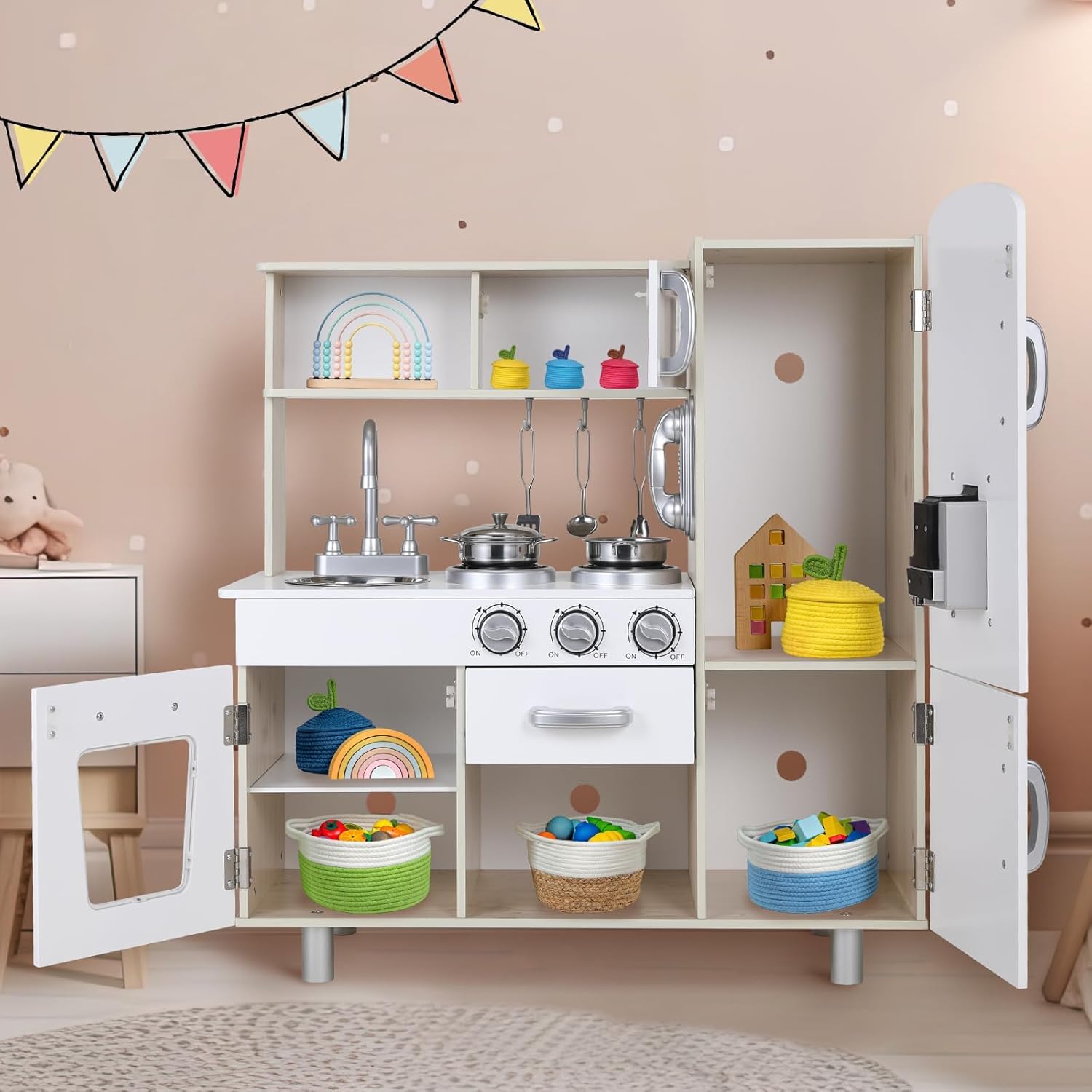
Features often include:
Simulated cooking and sizzling sounds
Light-up hobs that imitate real stovetops
Running water or sink play functions
Extensive accessory packs with utensils, cookware and pretend food
Interactive buttons, knobs and switches
Realistic appliance details such as ovens, microwaves or refrigerators
With realistic lights, sounds and interactive elements, this kitchen creates an immersive play experience that can keep children engaged for longer periods.
How to Get More Play Value From a Toy Kitchen
Getting more play value from a toy kitchen is easier than many parents think. By introducing new accessories, creating fresh play scenarios and incorporating simple learning activities, you can keep children engaged for longer while supporting their development. Here are three simple ways to make a toy kitchen feel new and exciting over time.
Rotate Accessories to Keep It Fresh
One of the easiest ways to extend the lifespan of a toy kitchen is to rotate accessories rather than displaying everything at once. When children have access to the same items every day, they can sometimes lose interest simply because the play environment feels familiar.
Try storing some accessories away and swapping them every few weeks. For example, one week the kitchen might feature baking tools and pretend cakes, while another week it could focus on fruit, vegetables and grocery shopping. Seasonal themes, such as Christmas baking or summer picnics, can also introduce new play ideas.
Introduce Real Ingredients for Sensory Play
Under appropriate adult supervision, incorporating safe household materials into kitchen play can create a richer and more engaging sensory experience. Children naturally enjoy exploring different textures, shapes and smells, and a toy kitchen provides the perfect setting for this type of hands-on learning.
Examples include:
Dried pasta
Rice
Lentils
Herbs and spices with mild scents
Empty food packaging
Clean yoghurt pots or food containers
These everyday items can inspire a wider range of imaginative scenarios, from running a pretend café to preparing a family dinner. Sensory play also helps children develop fine motor skills as they scoop, pour, sort and transfer ingredients between containers. In addition, discussing different foods and ingredients can introduce new vocabulary and encourage conversations about healthy eating habits.
Use It to Teach Counting and Sorting
A toy kitchen is much more than a role-play toy—it can also become an effective learning station for early maths and cognitive development. Everyday kitchen-themed activities provide natural opportunities for children to practise counting, categorising and problem-solving without feeling like they're doing formal learning.
Activities include:
Counting pretend fruit and vegetables
Sorting food items by colour, shape or type
Matching utensils to their correct uses
Grouping ingredients into categories
Measuring and comparing quantities
Creating simple shopping lists
By combining role play with educational activities, a toy kitchen can continue to provide developmental benefits long after the initial excitement of receiving it has passed.
Conclusion
So, is a toy kitchen worth having? For most families, the answer is undoubtedly yes.A toy kitchen combines entertainment with meaningful developmental benefits, helping children build creativity, confidence, communication skills and practical life knowledge. While both wooden and plastic options have their advantages, high-quality wooden kitchens typically provide better durability, stronger educational value and longer-lasting play.
For parents looking for the best balance of realism, quality and long-term value, Costway's wooden play kitchens offer features that support years of imaginative learning while fitting naturally into modern family homes.
FAQs
At what age should a child get a toy kitchen?
Most children can start enjoying a toy kitchen from around 18 months old, although the ideal age depends on the design and complexity of the playset. Younger toddlers benefit from simple kitchens with large accessories, easy-to-open doors and safe, rounded edges. As children grow into the preschool years (ages 3–5), they typically enjoy more advanced features such as multiple cooking stations, realistic appliances, lights, sounds and larger accessory sets.
Are wooden toy kitchens better than plastic ones?
Wooden toy kitchens are generally considered a better long-term investment because they tend to be more durable, stable and visually appealing. Many wooden models also feature realistic designs that blend more naturally with modern home interiors. Plastic toy kitchens, however, are often lighter, easier to move. The best choice depends on your budget, available space and how frequently the kitchen is likely to be used, but for long-term value and durability, wooden kitchens often come out ahead.
Do toy kitchens help child development?
Yes, toy kitchens offer a wide range of developmental benefits beyond simple entertainment. Through pretend cooking, serving and cleaning activities, children practise language and communication skills, expand their vocabulary and learn how to interact with others during cooperative play. Everyday kitchen tasks also help strengthen fine motor skills through actions . In addition, role-play encourages creativity, problem-solving and imaginative thinking as children invent stories, create menus and act out real-life situations.
How much space do I need for a play kitchen?
The amount of space you'll need depends on the size and style of the play kitchen you choose. If space is limited, corner play kitchens are often an excellent solution because they make use of underutilised areas while still providing plenty of play features. Before purchasing, it's a good idea to check the product dimensions and measure the intended play area to ensure a comfortable fit.
What accessories should I buy with a toy kitchen?
Adding accessories can significantly increase the educational value and play potential of a toy kitchen. Popular additions include pretend food sets, shopping baskets, ice cream carts, cooking utensils, pots and pans, aprons and play cash registers. These accessories encourage children to create more detailed role-play scenarios, such as running a café, grocery shop or restaurant.
Read More:
Best Summer Activities for UK Families in 2026
7 Must-Have Kids Bounce Houses for Joyful Growth
Best Baby Walker With Wheels (How to Choose + Top Picks)