


A “baby walker with wheels” can mean a few different products: a push-along walker (baby holds the handle and pushes), a sit-in walker (baby sits in a seat and scoots), or a multi-mode activity center that includes wheels for walker mode. They’re not interchangeable—especially for safety and developmental fit—so the “best” option is the one that matches your child’s age, strength, home layout, and how you plan to use it.
What makes a wheeled baby walker “best”?
1. Type matters: push walker vs sit-in walker
• Push walkers (recommended for many families): Baby stands behind it and pushes. Look for a wide base, non-slip wheels, and good handle height.
• Sit-in walkers (higher risk): Baby sits inside and can roll quickly. If you choose one, be extremely strict about stair-free spaces, locking features, and constant hazard control.
2. Wheel design and control
For “best with wheels,” prioritize:
• Rubberized, non-slip wheels to reduce skidding and protect floors.
• Speed control / resistance (or lockable wheels) so the walker doesn’t “run away.”
• Wide wheelbase + anti-tip geometry (triangular frames are a good sign).
3. Safety signals you should actually care about
• Clear age range + max weight that matches your child.
• Independent testing / compliance claims (e.g., UKCA/EN71 for toys; ASTM/CPSIA for U.S.-market items).
• No sharp edges, pinch points, or small loose parts.
4. Development and play value
The best walkers do more than roll:
• Fine-motor activities (shape sorters, sliders, knobs)
• Sensory play (lights/sounds used moderately)
• Imaginative play (kitchen/tool themes)
• Storage for toys (reduces clutter—and tripping)
Best baby walker with wheels
1. Best “all-in-one push walker” for role-play fun
6-in-1 Wooden Baby Stroller Push & Pull Learning Activity Center
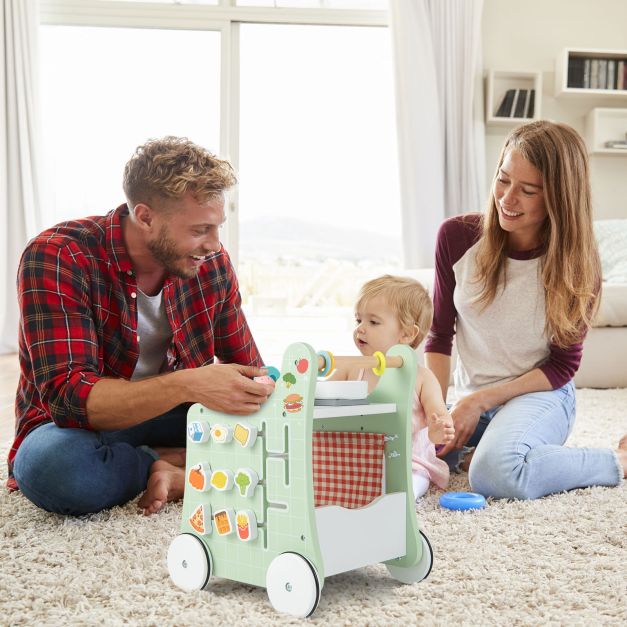
A strong choice if you want a push walker + activity center that keeps a toddler engaged even when they’re not walking. The pretend kitchen theme is great for imaginative play, while the handle and rubber wheels support controlled pushing. It also includes storage/straps to keep accessories from ending up underfoot.
Why it stands out
• 6-in-1 play modes (walker, kitchen, clock, shape matching, slider, storage)
• Rubber, quiet wheels + ergonomic handle concept
• UKCA + EN-71 noted in the description
• Best for: 12 months+ toddlers who like pretend play
2. Best “sensory sit-to-stand walker” with lights + ball play
Baby Push-Along Walker With Lights and Ball Game

This is a classic sit-to-stand learning walker style: lots of front-panel interaction, plus a stable body designed for pushing. The lockable rear wheels are a big advantage when your child wants to sit and play instead of push.
Why it stands out
• Lockable rear wheels for stationary play
• Water-injection option to add stability/weight
• Light + button panel + ball game for hand-eye coordination
• Best for: toddlers who like interactive panels and need a steadier base
3. Best “grow-with-me sit-in walker” for adjustability
4-in-1 Baby Push Walker With Adjustable Height and Speed

If you’re considering a sit-in walker, adjustability helps you match the walker to your child’s size and confidence. The speed adjustment is especially important—fast rolling is one of the biggest issues with wheeled sit-in walkers. (Still: keep it far away from stairs and hazards.)
Why it stands out
• 3 height settings + speed adjustment
• Anti-slip stair pads + safety bumper concept
• Folds compactly for storage
• Best for: 6–18 months (as listed) where space + speed control are priorities
4. Best wooden “activity-heavy” push walker
7-in-1 Baby Wooden Walker for 1-Year-Old

If you prefer wood and want maximum play variety without overstimulation, this one is packed: bead maze, gears, sliders, shape sorter, mirror, and flip blocks—plus a rear storage shelf.
Why it stands out
• Multiple panels to rotate activities (great for attention span)
• Non-slip rubber rings on wheels (quiet + floor-friendly)
• Stable triangular structure design + EN-71/UKCA mentioned
• Best for: 12 months+ toddlers who love hands-on toys
5. Best “toy storage cart” walker for pretend shopping
2-in-1 Wooden Baby Walker With Storage Chest and 4 Wheels
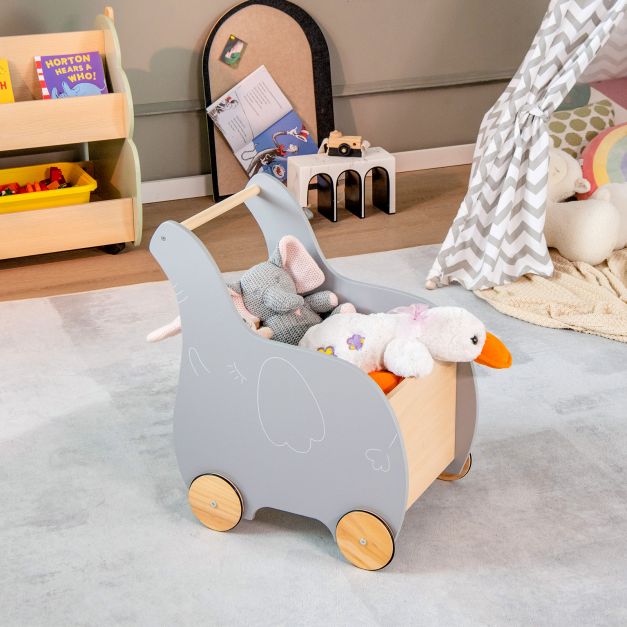
This one is excellent for households that want the walker to double as a toy hauler. The storage chest encourages “push and collect,” which can keep kids walking longer (and helps tidy up).
Why it stands out
• Big storage chest (toys, books, snacks)
• Rubber-ring wheels for smooth, quiet rolling
• Great imaginative play (“shopping cart” idea)
• Best for: 3+ (as listed) kids who love role-play and moving toys around
6. Best budget-friendly “shopping cart” style with easy-clean plastic
Elephant-Shape Baby Walker Push Toy (HDPE)
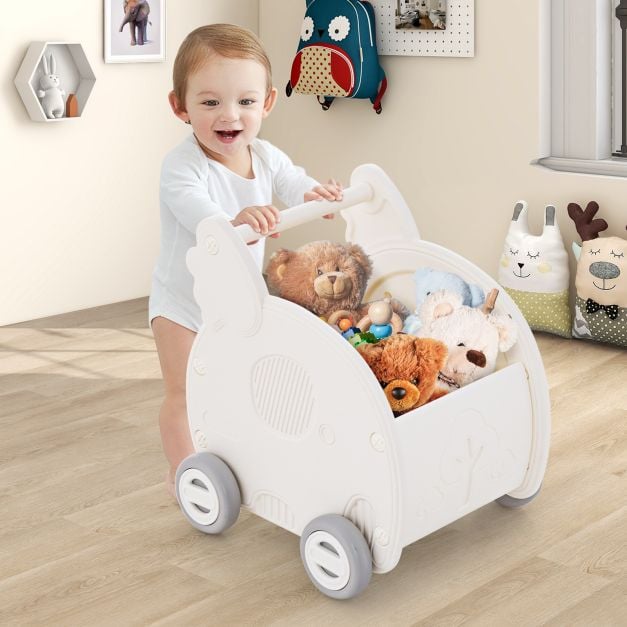
If you want something lightweight, durable, and wipe-clean, HDPE can be a good fit. The description emphasizes ergonomic rear-wheel spacing and roomy storage.
Why it stands out
• Durable, BPA-free HDPE + EN71/BS noted
• Big storage bin
• Simple, low-fuss design
• Best for: 3+ kids who want a push cart more than an activity panel
7. Best “push walker + tool bench” for little builders
2-in-1 Wooden Baby Push Walker With Multi-Activity Center (Tool Workbench)
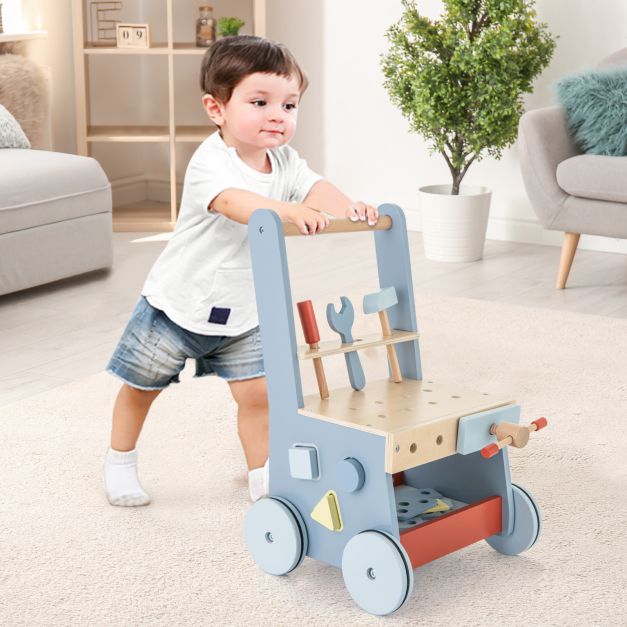
This is a smart option for kids who love “fixing” things. It turns walking practice into imaginative, skill-building play (tools + sorter + clock).
Why it stands out
• Converts to a tool workbench (screwdriver/hammer/wrench play)
• Rubber-padded wheels for stability and low noise
• Extra under-storage to reduce clutter
• Best for: toddlers who love building/pretend repair play
8. Best “activity center for 0–2” with walker mode + seat rotation
4-in-1 Baby Activity Center (Walker / Bouncing Saucer / Activity Table / Play Mat)

This is less of a pure “walker” and more of a multi-stage activity system. The 360° seat and convertibility can extend its useful life, and wheels can be locked for bouncing mode.
Why it stands out
• Lockable universal wheels (walker mode vs stationary mode)
• 3 height levels + anti-collision corners concept
• Includes play mat option for earlier months
• Best for: parents who want one product that shifts with stages (0–2 years as listed)
9. Best “dining + mobility” combo (booster seat with casters)
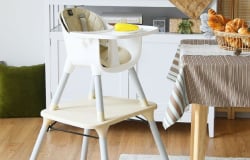
6-in-1 Baby Walker Training Set (Booster Seat + Casters + Handlebar)
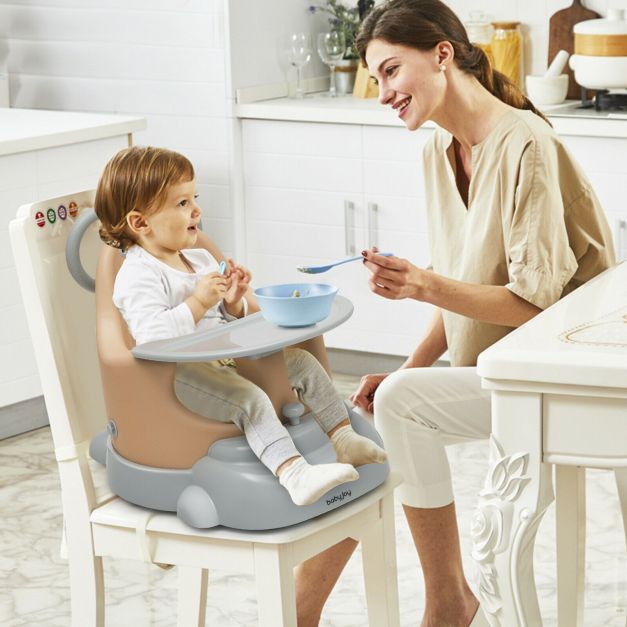
This is a niche but practical idea: booster seat, tray, straps, plus a mobility function. For many families, the biggest benefit is meal convenience + easy cleaning.
Why it stands out
• PU seat + detachable tray (easy wipe-down)
• Secure straps + 3-point harness
• 360° casters + handlebar for moving
• Best for: families who value a multi-use feeding seat (3–36 months as listed)
10. Best “feature-rich” adjustable, foldable sit-in walker
6-in-1 Adjustable Folding Baby Activity Center With Music & Lights

If you want a sit-in walker style with extras, this one emphasizes height adjustment, foldability, and a removable tray that can be used for play or eating.
Why it stands out
• 6 modes (rocker/hand push/jumper/walker/eating/education)
• 3 height settings + foldable frame
• Detachable tray + washable seat cushion
• Best for: 7–14 months (as listed) where storage space matters
FAQ
1. Are baby walkers with wheels safe?
Safety depends heavily on the type. Many child health and safety groups warn against sit-in infant walkers due to fall and hazard risks—even with supervision. Push walkers are often considered a more practical alternative, especially when used at the right stage.
2. What age is best for a wheeled walker?
It depends on the design. Some are marketed from a few months (activity-center styles), while push walkers are commonly used when babies are already pulling up and cruising (often around 9–12+ months). Always follow the product’s stated age and weight range.
3. What wheels are best: plastic or rubber?
Rubber or rubber-ring wheels are usually better for traction, noise reduction, and protecting floors. If the product uses hard plastic wheels, look for speed control, a wide base, and stable geometry.