



Bar stools with backs are one of the easiest upgrades you can make to a kitchen island, breakfast bar, or home bar—because they turn “quick perch” seating into something you can actually relax in. A supportive backrest improves posture, reduces fatigue during longer sit-down moments, and makes stools more comfortable for a wider range of people (including kids, guests, and anyone who prefers extra support).
This guide walks you through the key things to check before you buy—height, comfort, materials, stability, and maintenance—then recommends 5 practical options that match different needs and styles.
1. Start with the most important factor: seat height & counter fit
Most returns happen because of height mismatch—not because the stool is “bad.”
A simple rule:
Aim for 25–30 cm (10–12") of space between the seat and the underside of the countertop/bar for comfortable legroom.
Typical matching ranges (general guidance):
• Kitchen counter (about 90 cm / 36") → counter-height stools (often ~60–66 cm seat height)
• Bar height (about 101–109 cm / 40–43") → bar-height stools (often ~70–75 cm seat height)
Pro tip: If your counter is shared (different family heights, kids + adults), an adjustable stool can be the easiest “one solution for everyone.”
2. Choose the right backrest style for real comfort
Backrests aren’t all the same—shape and height change how supportive a stool feels.
• High back (more support): Better for longer sitting, dining, or working at the island.
• Low back (lighter look, still supportive): Great for casual seating and keeping the room open visually.
• Curved/slanted back: Helps your spine stay neutral and feels “hugging” instead of flat.
Also consider:
Armless vs. armrests
• Armless stools tuck in neatly and work well in tighter spaces.
• Armrests boost comfort for longer sitting, but may not fit under some counters and can take more room side-to-side.
3. Decide: swivel or stationary?
A backrest already improves comfort—adding swivel can improve usability.
Swivel stools (360°)
Best for:
• Open-plan kitchens where you talk to someone behind you
• Entertaining (turn to chat without dragging the stool)
• Tight spaces where moving the stool is annoying
Look for:
• A smooth swivel mechanism (quiet, stable rotation)
• A sturdy frame to prevent wobble over time
Fixed stools (no swivel)
Best for:
• A cleaner, more stable “sit and eat” setup
• Households that prefer fewer moving parts
• High-traffic areas where stools get bumped
If your island is a social hub, swivel is often worth it. If you want a more “dining chair” feel, fixed can be perfect.
4. Prioritize supportive seating: padding, shape, and footrests
Comfort isn’t only the back—your seat and legs matter too.
What to look for:
• Cushioning: High-density sponge feels supportive and holds shape longer than thin foam.
• Seat shape: A slightly contoured or “dented” seat can feel more natural for longer sitting.
• Footrest height and placement: A footrest should let you rest your feet without tensing your thighs. It also improves posture by preventing you from sliding forward.
If you’re buying stools for real daily use (breakfast, homework, laptop time), choose padded seats + footrests as your baseline.
5. Materials that match your lifestyle: wood, metal, and upholstery
Frames: rubber wood vs. metal
Rubber wood frames
Warm, classic look. Often very stable when legs splay outward and the joints are reinforced. Great for kitchens and dining spaces that lean traditional, rustic, or vintage.
Metal frames
Modern, sleek, and often ideal for slimmer silhouettes. Great if you want a lighter visual footprint or a contemporary style.
Upholstery: PU/PVC leather vs. velvet
PU/PVC leather (or leather-like)
Easy wipe-clean surface—excellent for families, spills, and everyday mess.
Velvet
Soft, cozy, and stylish with a “boutique” vibe. Often easy to maintain with light brushing/vacuuming, but it’s better for lower-mess zones than a kids’ snack station.
6. Stability & weight capacity: don’t ignore the “boring” specs
A bar stool with a backrest invites people to lean—so stability matters.
Check for:
• Strong legs (solid wood or heavy-duty metal)
• Reinforcement under the seat
• Foot pads (anti-slip + floor protection)
• Reasonable weight capacity for your household
From your options, weight capacities range roughly from 115 kg up to 400 lbs (about 181 kg) depending on model—so you can match the stool to your needs confidently.
7. Space planning: measure width, not just height
Before you order, measure:
• How many stools you want to place side-by-side
• The available counter length
A comfortable spacing guideline:
• Leave about 15–25 cm (6–10") between stools (more if people are broad-shouldered or if stools have armrests).
Also check whether stools need to tuck fully under the counter—backs and armrests can affect that.
8. Style: match the stool to the room’s “visual temperature”
• Vintage / rustic: two-tone wood finishes, hollowed backs, classic silhouettes
• Mid-century modern: clean lines, warm wood legs, simple padded seats
• Retro-industrial: metal frames, rivet detailing, darker tones
• Glam / modern luxe: velvet + gold-tone legs for a statement look
A good trick: match one major element (wood tone, metal finish, or upholstery color) to something already in your space—cabinet pulls, lighting, table legs, or appliances.
Recommended Bar Stools With Backs
1. Solid Rubber Wood 360° Swivel Bar Stools (Set of 2/4, vintage two-tone)
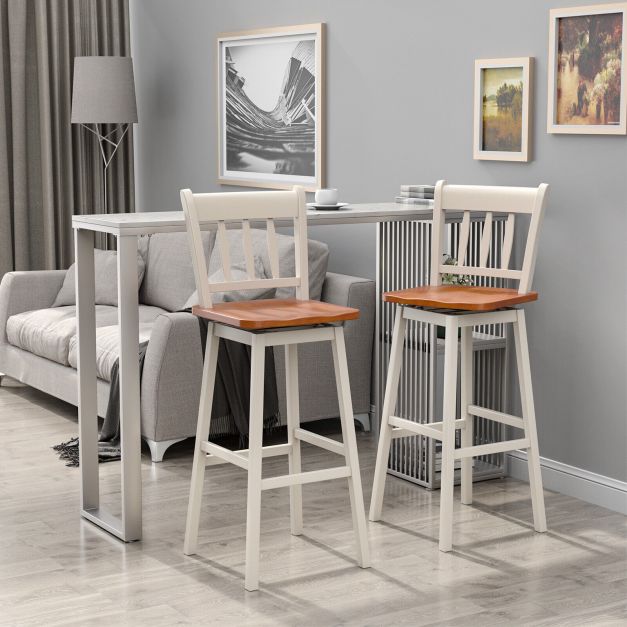
Solid Rubber Wood 360° Swivel Bar Stools
Best for: classic kitchens, rustic spaces, and social islands
Why you’ll like it:
• 360° swivel for easy conversations and all-direction viewing
• Solid rubber wood frame with outward legs for stability
• Vintage two-tone aged finish adds warmth and character
• Hollowed back + footrest for supportive, comfortable sitting
• 125 kg max load per stool and easy daily wipe-down
2. Bar Stool Set of 2 with Padded Seat & Back Cushion (PU leather + rubber wood legs)
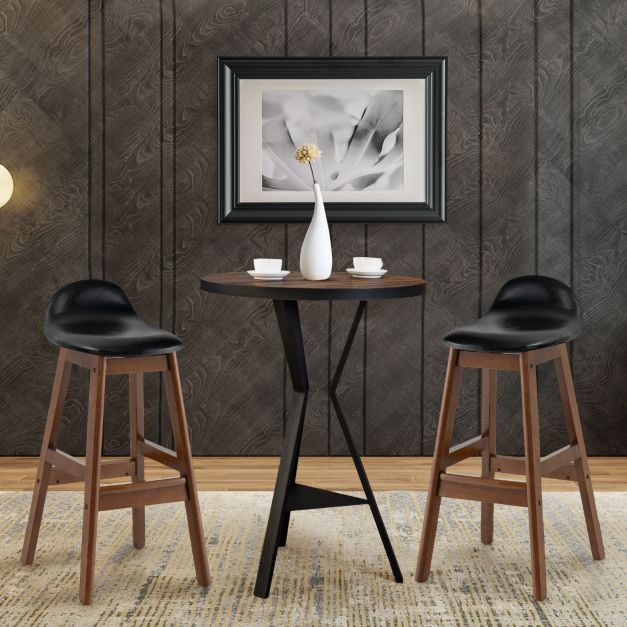
Bar Stool Set of 2 with Padded Seat & Back Cushion
Best for: everyday family use and easy cleanup
Why you’ll like it:
• Soft sponge padding for a cozy sit
• Waterproof PU leather wipes clean easily
• 100% rubber wood legs (stronger than MDF alternatives)
• Footrests + non-slip foot pads for comfort and floor protection
• Up to 150 kg (330 lbs) each; seat height 70 cm for bar-height counters
3. PU Leather 360° Swivel Adjustable Bar Stool with Armrest (metal frame)
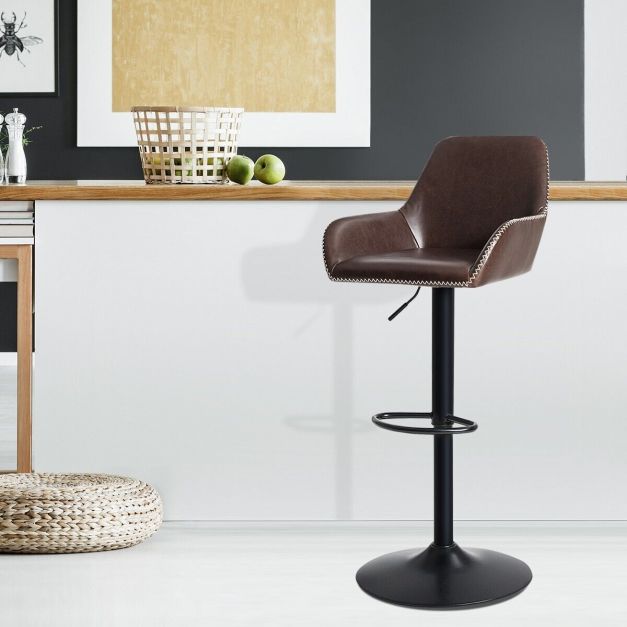
PU Leather 360° Swivel Adjustable Bar Stool with Armrest
Best for: mixed-height households and maximum “lounge comfort”
Why you’ll like it:
• Adjustable height via gas lift—flexible for different counters and users
• 360° swivel for convenience and mobility
• Backrest + armrests reduce fatigue for longer sitting
• Thick sponge + soft, crease-resistant leather feel
• Stable base with anti-scratch rubber ring; 115 kg capacity per stool
4. Swivel Bar Stool Set of 2 with Low Back (PVC leather + rubber wood legs + rivets)

Swivel Bar Stool Set of 2 with Low Back
Best for: compact spaces that still need back support
Why you’ll like it:
• Low back + swivel seat for comfort without looking bulky
• High-density sponge + durable PVC leather for soft seating
• Solid rubber wood legs with a strong 400 lbs capacity
• Footrest + anti-slip pads for stability and leg comfort
• Retro rivet detailing for a standout accent in kitchens, cafes, or home bars
5) Bar Stools Set of 2 with Curved Backs & Padded Seats (gray velvet + gold metal)
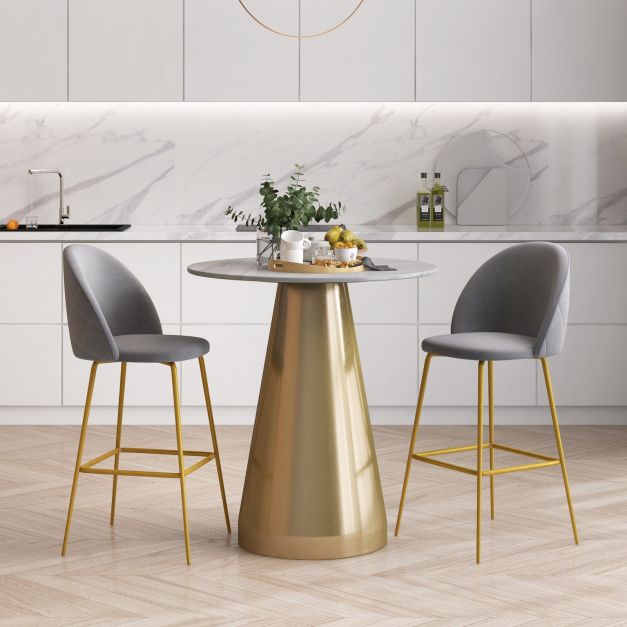
Bar Stools Set of 2 with Curved Backs & Padded Seats
Best for: modern homes that want a statement piece
Why you’ll like it:
• Ergonomic curved backrests support your posture
• Velvet upholstery + elastic sponge for a plush, cozy feel
• Gold-tone metal legs + footrests for stability and style
• 74 cm seat height fits 102–110 cm bars
• Ideal for kitchens, lounges, bistros, or a chic home bar corner
FAQ: Bar stools with backs
1. Are backrests really worth it?
Yes—especially for longer sitting. A backrest reduces fatigue and improves posture, making stools feel closer to dining chairs.
2. What’s the easiest upholstery to maintain?
PU/PVC leather is typically the most wipe-friendly. Velvet can still be manageable but is better in lower-spill areas.
3. Should I choose 70 cm or 74 cm seat height?
Both are bar-height styles, but the best choice depends on your bar height and the legroom you want. Use the “10–12 inch gap” rule between seat and counter underside.
4. Do swivel stools get loose over time?
They can if the frame is weak or hardware loosens. Choosing sturdy materials (solid wood or heavy-duty metal) and tightening fittings occasionally helps keep them stable.