






A baby walker can be a fun way to support early mobility—when it’s chosen carefully and used correctly. Today’s “baby walker” category includes everything from push-along walkers (push-behind) to activity centers and multi-mode sit-to-stand designs. Each type fits a different age range, developmental stage, and home setup. This guide walks you through the key features that matter most—especially safety, stability, ergonomics, adjustability, and play value—so you can buy with confidence.
As a general rule, always follow the product’s age and weight guidance, supervise closely, and use walkers on safe, flat surfaces away from stairs. If your child is not yet able to hold their head steadily or sit with support, a traditional walker-style seat is usually not appropriate.
1. Know the Main Types of Baby Walkers
Push-along walkers (push-behind)
These are often the most parent-favorite style for learning to walk because they encourage a natural standing posture. Babies hold a handle and push the walker forward. Many models include activity panels to keep kids engaged.
Best for: babies who can pull to stand and cruise (often around 9–18 months, but always follow the product guidance).
What to look for: wide base, anti-slip wheels, speed control or resistance, stable frame.
Sit-to-stand learning walkers / activity centers
These combine a play panel with a push handle. Your child can sit and explore the activity features, then stand and push when ready.
Best for: babies transitioning from seated play to standing support.
What to look for: stable structure, lockable wheels (for play mode), engaging but not overstimulating activities.
Multi-mode walker systems and convertible seats
Some products combine feeding, booster seating, and mobility training. These can be convenient for small homes and caregivers who want one product that does more.
Best for: families who want multi-function use (feeding + play + mobility support).
What to look for: secure straps/harness, easy cleaning, stable base, safe casters/wheels.
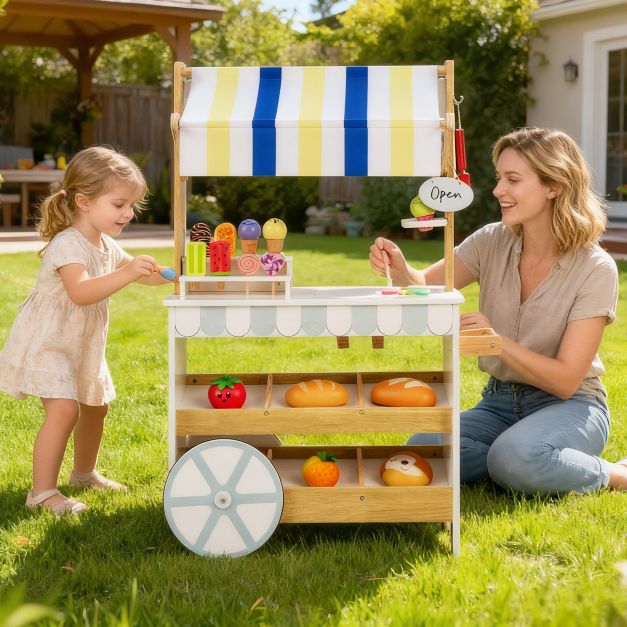
Role-play + walker hybrids (wooden activity centers)
These add imaginative play (like a mini kitchen) to walking support, which can extend the toy’s usefulness beyond the first walking phase.
Best for: toddlers who love pretend play and hands-on activities.
What to look for: smooth edges, sturdy materials, safe accessories, sensible height/handle design.
2. Safety First: What Matters Most in a Baby Walker
Safety is the non-negotiable priority. A “good” walker is one that supports learning without creating avoidable risks.
Choose a stable, tip-resistant design
Look for:
Wide base and a low center of gravity
Triangular or reinforced side structures that resist tipping
A design that doesn’t “lurch” forward when the child leans on it
If the walker can be weighted (for example, with water injection), that can add stability for stronger pushers—just ensure it’s designed for that purpose.
Prioritize controlled movement
Too-fast rolling is a common issue. Better choices include:
• Anti-slip wheels
• Rubber rings for quiet rolling and better grip
• Speed adjustment or resistance settings
• Lockable wheels when the child is using it as a stationary activity center
Check materials and finishing details
For babies and toddlers, look for:
• Odorless, child-safe plastics or well-finished wood
• Rounded corners and burr-free edges
• Securely attached parts that won’t easily detach during play
Use walkers in the right environment
Even the best product needs safe usage:
• Keep walkers away from stairs, steps, and thresholds
• Use on flat floors; avoid rugs that can stop wheels abruptly
• Supervise actively—walkers are not “set-and-forget” devices
3. Ergonomics: Support Healthy Movement and Posture
Parents often worry about walking posture (like “O” legs). While no walker can “guarantee” perfect gait, the design should encourage upright pushing and balanced steps.
Look for:
• A comfortable, easy-grip handle at a suitable height
• A wide rear walking space so the child’s legs aren’t forced into narrow steps
• A structure that supports steady, controlled pushing, not runaway rolling
If the product includes a seated mode (like a car-style walker), make sure:
• The seat is supportive and breathable
• The base includes anti-slip pads and protective bumpers
• The height range fits your baby’s size so feet can contact the floor properly (following the product instructions)
4. Adjustability: One Walker That Grows with Your Baby
If you want longer use, adjustability is a big value win.
Key adjustability features include:
• Height adjustment (helps match baby’s size and keep posture natural)
• Speed control (slower for beginners, freer rolling for confident walkers)
• Multiple modes (push-behind, push car, rolling toy, etc.)
These features can reduce frustration—your child can start with a more stable, slower configuration and progress over time.
5. Play Value: Learning Features That Are Actually Useful
A baby walker often doubles as a learning toy. The best activity features promote development without being overwhelming.
Good learning features include:
• Shape matching (fine motor + problem-solving)
• Sliders and bead/track elements (coordination)
• Buttons and music/light controls (sensory exploration, cause-and-effect)
• Ball games (hand-eye coordination)
• Pretend play sets (language, creativity, social play)
Practical tip: choose a walker with some storage—kids love putting toys in and taking them out, and caregivers love a tidier living room.
6. Age Range: Pick Based on Development, Not Just Months
Age recommendations matter, but development matters more.
• 3–6 months: Most babies are not ready for walker-type mobility. If a product is a convertible seat/booster, use it only in the safe, intended mode and only if your baby meets the posture requirements.
• 6–12 months: Many babies are practicing sitting, crawling, pulling to stand, and cruising. Sit-to-stand activity centers may fit some babies at the later end of this range.
• 12+ months: Many toddlers enjoy push-behind walkers, role-play activity centers, and more complex toy functions.
Always follow the product’s stated range and stop using any mode once your child exceeds height/weight limits.
Product Picks: 5 Baby Walkers and Activity Walkers Worth Considering
Below are five options based on the information you provided—each suited to a slightly different need.
1. 6-in-1 Wooden Baby Stroller Push-and-Pull Learning Activity Center (12+ months)
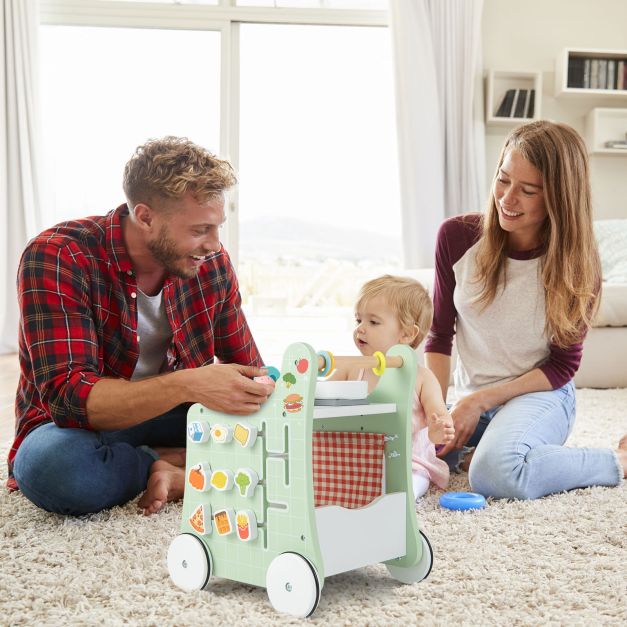
6-in-1 Wooden Baby Stroller Push-and-Pull Learning Activity Center
If you want a walker that also works as a long-lasting activity toy, this is a standout. It combines a push-walker with a pretend play kitchen and multiple learning elements.
Why it’s a strong choice:
• 6-in-1 design: push walker + play kitchen + toy storage + learning clock + shape matching + slider game
• Ergonomic push handle and anti-slip, silent wheels to support controlled walking
• Role-play kitchen zone with accessories for imaginative play
• Safety-minded details like rounded edges, storage straps, and child-friendly materials (UKCA / EN-71 noted)
Best for: toddlers who love pretend play and parents who want “one toy that does more.”
2. 6-in-1 Baby Walker Training Set (3–36 months)
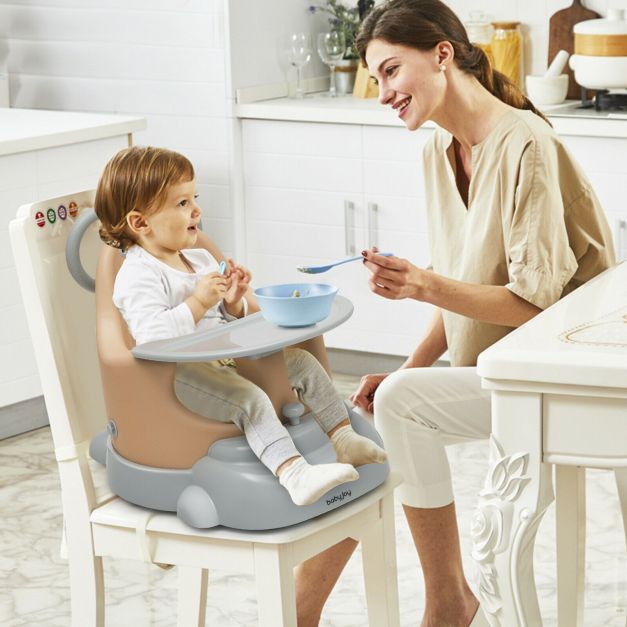
6-in-1 Baby Walker Training Set (3–36 months)
This one is ideal if your priority is multi-function convenience—feeding support + mobility training features in one system.
Why it’s a strong choice:
Converts between booster seat and independent seat, plus walker-style training support
• PU seat + detachable tray for easier cleaning
• 3-point harness and chair-attachment straps for security
• 360° swivel casters and handlebar for movement and balance practice
• Waterproof design adds flexibility (including bathroom use, as described)
Best for: caregivers who want a versatile seat + mobility combo and easy cleanup.
3. Baby Push-Along Walker with Lights and Ball Game (Sit-to-Stand)

Baby Push-Along Walker with Lights and Ball Game
This is a classic sit-to-stand learning walker with strong sensory play value—buttons, lights, and a ball game—paired with stability features.
Why it’s a strong choice:
• Wide back space and top handle to encourage better pushing posture
• Water injection feature to add stability based on your child’s strength
• Lockable rear wheels to keep it stationary during seated play
• Activity panel includes lights, music/buttons, and a ball game for coordination
• Safety notes include odorless PP material and certifications mentioned (ASTM/CPSIA)
Best for: babies who need both seated play and supported standing practice.
4. 4-in-1 Baby Push Walker with Adjustable Height and Speed (6–18 months)

4-in-1 Baby Push Walker with Adjustable Height and Speed
If you want a walker that adapts as your baby grows, this multi-mode car-style design is built around customization.
Why it’s a strong choice:
• 4 modes: baby walker mode, push-behind mode, push car mode, rolling toy car mode
• 3 height settings and adjustable wheel speed
• Safety-focused design with anti-slip pads, stable wheels, and a rear safety bumper
• Fun driving-themed features: steering wheel, shifter, music/light effects
• Quick-fold storage for smaller homes
Best for: families who value adjustability and compact storage.
FAQ
1. Are baby walkers safe?
They can be safer when they are push-behind walkers or stable activity walkers used under supervision on flat surfaces. Any walker that moves quickly or can reach stairs is higher risk. Always use barriers and keep the walker away from hazards.
2. Push walker vs sit-in walker: which is better?
Push-behind walkers generally encourage a more natural standing posture and controlled pushing. Sit-in walkers vary widely—if you choose one, pay extra attention to stability, speed control, and safe usage environment.
3. Do lights and music help, or are they distracting?
For many babies, lights/music improve engagement and cause-and-effect learning. The best designs also let you control volume or turn features off so play stays manageable.
4. How long should my baby use a walker each day?
Short, supervised sessions are usually best. Watch for fatigue or frustration, and focus on varied floor play (crawling, cruising, standing at safe furniture) alongside any walker use.