
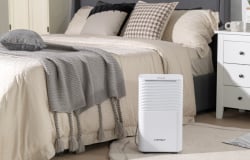





With damp, condensation, and indoor laundry being common issues across UK homes, dehumidifiers have become an essential appliance. But with energy prices still a concern, many households are asking the same question: how much does it actually cost to run a dehumidifier?
The good news is that, compared to appliances like tumble dryers or electric heaters, dehumidifiers are generally relatively inexpensive to run. However, the exact cost depends on factors such as the model, power consumption, and how often it’s used.
Key Takeaways
Significant Savings Over Tumble Dryers: Running a compressor dehumidifier costs approximately 5.6p per hour, compared to roughly 70p for a standard tumble dryer.
Temperature Dictates Efficiency: Compressor models are most cost-effective in heated rooms above 15°C, while desiccant models are more efficient for unheated spaces like garages.
Smart Humidistats Minimise Waste: Units with built-in humidistats save electricity by automatically powering down once the target humidity (50%–55%) is reached.
Isolated Spaces Reduce Runtime: Keeping doors and windows closed prevents damp air from leaking in, significantly shortening the machine's operational time.
Lower Heating Costs: Removing moisture makes indoor air easier to warm, allowing your central heating to operate more efficiently.
How much does it cost to run a dehumidifier?
To estimate your exact running costs, use this simple formula:
Running Cost (f) = Power (kW) x Hours Used x Electricity Rate (f/kWh)
Comparison: Dehumidifier vs. Tumble Dryer
Assuming an average UK electricity price of £0.28 per kWh:
The "Laundry Mode" Advantage: Running a compressor dehumidifier for 8 hours to dry clothes costs roughly 45p, whereas a single cycle in a tumble dryer can exceed £1.50.
What can affect the cost of running a dehumidifier?
While keeping damp at bay is essential during British winters, the final impact on your energy bill comes down to five key variables.
1. Technology Type: Matching the Machine to the Room
The most direct factor is the technology under the hood. In the UK, efficiency depends entirely on your room temperature:
Compressor Models (150W – 300W): The "Gold Standard" for heated living areas. They are cheap to run but lose efficiency in rooms below 15°C as they waste energy on "auto-defrost" mode.
Desiccant Models (300W – 600W): Although the wattage is higher, they are actually more cost-effective for unheated conservatories or garages. They extract moisture rapidly in the cold and expel warm air, which can slightly reduce your reliance on central heating in that space.
2. Your Energy Tariff & Timing
Since April 2024, the Ofgem Price Cap dictates the standard rate, but when you run the machine matters:
Smart Tariffs: On plans like Octopus Agile or Economy 7, running your unit overnight can cost 70% less than during the evening peak.
The Formula: To track your spend, use: $(Wattage \text{ in kW}) \times Hours \times Pence \text{ per kWh}$.
3. Usage Mode (The "Laundry" Impact)
How hard the machine works directly impacts the draw on your meter:
Laundry Mode: Running at maximum power to dry a clothes horse is intense, but it is still significantly cheaper than a tumble dryer.
Smart Humidistats: Modern units with a built-in humidistat are the ultimate money-savers. They power down automatically once your target (e.g., 50%) is hit, whereas older "always-on" models can double your daily costs.
4. Home "Tightness" & Insulation
The UK's older housing stock (Victorian/Edwardian) often suffers from "leaky" insulation.
The "Losing Battle": If you have draughty sash windows or single glazing, damp outdoor air seeps in constantly.
Pro-Tip: Always keep doors and windows shut in the room being treated. If the door is open, you aren't just drying the room—you're trying to dry the whole house, which keeps the motor running indefinitely.
5. Maintenance: The Hidden Cost of Dust
A neglected filter is an energy drain. If the filter is clogged with dust or pet hair, the fan has to work twice as hard to pull air through. Vacuuming your filter every 14 days ensures the machine operates at its rated wattage rather than spiking due to resistance.
How to reduce the cost of running a dehumidifier?
While dehumidifiers are essential for protecting British homes from winter damp, you naturally don't want them driving up your energy bills. Keeping costs manageable is straightforward if you adopt these four sensible habits:
Use the Smart Humidistat
The most effective way to stop wasting electricity is to rely on your machine's built-in smart humidistat. Instead of running the unit continuously, set a target humidity level—50% to 55% is ideal for most UK homes. Once the room reaches this healthy baseline, the machine will automatically power down, switching back on only when moisture levels creep up. This "set and forget" approach ensures you only pay for the extraction you actually need.
Keep Doors and Windows Closed
Treat your dehumidifier like your central heating: it works best in an enclosed space. If you leave interior doors open, the machine will stubbornly try to dry the entire house rather than just one room. Even worse, a cracked window will pull in damp air from the British outdoors, forcing the unit into a losing battle. For the most cost-effective results, isolate the room by keeping doors and windows firmly shut while the unit is running.
Provide Proper Airflow
Where you place your dehumidifier directly impacts its efficiency. To ensure the best performance, keep the unit at least 20cm away from walls, furniture, or heavy curtains. Tucking it into a tight corner or behind a sofa restricts the air intake, forcing the internal fan to work overtime and draw more power. Giving the machine enough "breathing room" allows it to process damp air faster, significantly shortening its total runtime.
Maintain the Filter
Over time, the dust filter will inevitably get clogged with household lint, pet hair, and dust. A blocked filter restricts airflow, meaning the motor has to work much harder—and consume more electricity—to draw moisture in. A quick hoover or rinse of the filter every fortnight keeps the machine running at peak efficiency, preventing unnecessary spikes in your energy usage and extending the life of the appliance.
Which Types of Dehumidifiers Are the Most Cost-Effective in the UK?
When shopping for a dehumidifier in the UK, the "most cost-effective" choice entirely depends on where you plan to put it. A machine that costs pennies to run in a warm living room might be incredibly inefficient in a freezing garage. Here is a breakdown of the main types and the best models for the job.
Compressor Dehumidifiers (Cheapest for Heated Homes)
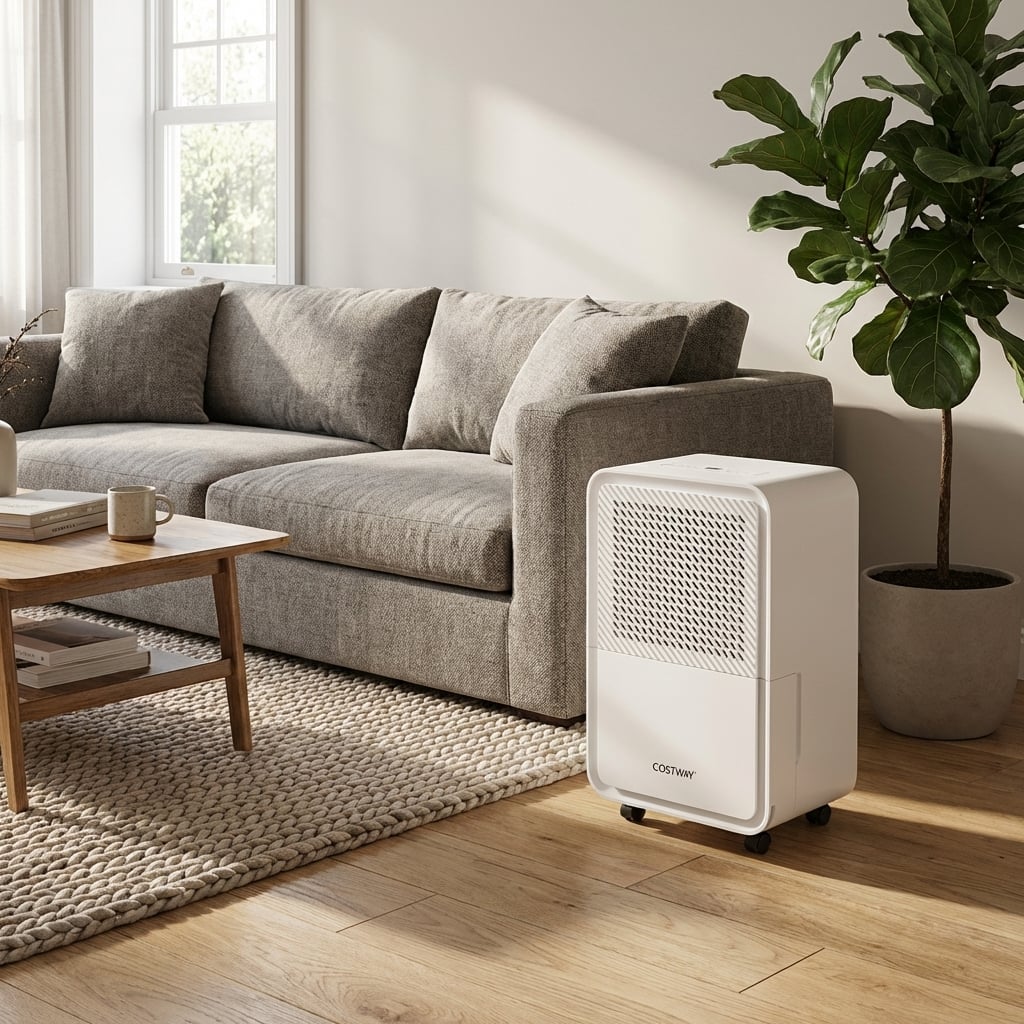
In typically heated British homes (above 15°C), compressor models are the most economical choice. They use very little electricity to draw moist air over cold coils, making them significantly cheaper to run than desiccant alternatives for daily maintenance in living rooms or bedrooms.
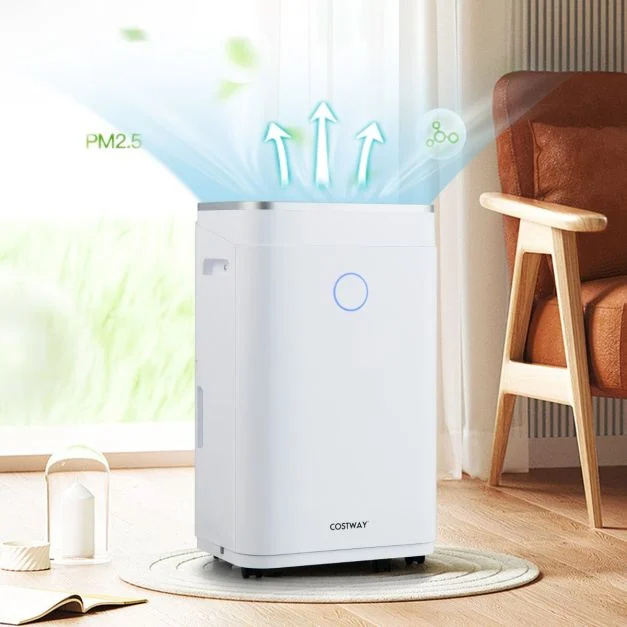
For larger households or more stubborn damp issues, a high-capacity 20L/25L Compressor Dehumidifier is a standout solution. It balances powerful extraction with a massive 6.5L water tank, meaning it works less often to achieve the same results as smaller units. By using the built-in 24-hour timer, you can even schedule it to run during cheaper off-peak energy hours to further slash your bills.
Key Features for Efficiency:
High-Capacity Efficiency: Larger 20L/25L units extract moisture faster, meaning they run for shorter periods than smaller models to achieve the same result.
Smart Humidistat: Features a 3-color LED system that automatically shuts the unit off once the target humidity is reached, preventing any unnecessary energy spend.
Laundry Alternative: The dedicated 'Laundry Mode' dries clothes at a fraction of the cost of a tumble dryer while preventing damp-related heat loss in your home.
Best for: Large family homes, drying laundry indoors, and preventing mould in heated basements or open-plan living areas.
Desiccant Dehumidifiers (Best ROI for Cold or Unheated Spaces)
While they have a higher wattage (300W–600W), desiccant units are the most cost-effective choice for unheated UK spaces like conservatories or garages.
No Defrost Waste: Unlike compressor models, they don't waste energy on "defrost cycles" in cold air, working efficiently down to 1°C.
Secondary Heat Source: They expel warm air (approx. 10-12°C above ambient), which can lower your central heating requirements in that specific room.
Smart Dehumidifiers with Humidistats and Laundry Modes
In the UK, "Smart" features are essential for controlling energy bills. Rather than running 24/7, these units use a humidistat to power down once your target is reached. This is especially useful for drying laundry indoors—a common necessity in our climate that can be much cheaper than using a tumble dryer.
For standard-sized bedrooms, home offices, or flats, the 15L Smart Dehumidifier with 4 Modes is a brilliant, mid-sized solution. It is designed to be highly efficient, pulling up to 15L of moisture daily while offering a dedicated Dry Clothes mode to handle wet laundry quickly and economically.
Key Features for Efficiency:
Targeted Modes: Features 4-in-1 versatility (Auto, Dry, Comfort, Clean) so you can tailor energy usage to the specific damp issue.
Off-Peak Scheduling: The 24-hour timer is essential for UK users on Octopus Agile or Economy 7 tariffs, allowing you to run the machine only when electricity is cheapest.
Whisper-Quiet Efficiency: Low-noise operation ensures the unit can run effectively overnight during off-peak hours without disturbing sleep.
Best for: Bedrooms, small flats, and anyone needing a quiet, smart way to dry laundry indoors without a spike in energy costs.
Conclusion
While every penny counts on a UK energy bill, a dehumidifier is a savvy investment rather than a major expense. By choosing an energy-efficient model with a smart humidistat, you can protect your home from damp for just pennies an hour. Given the significant savings on laundry drying and the fact that dry air is much cheaper to heat, these devices quickly pay for themselves throughout the British winter.
FAQs
How much does it cost to run a dehumidifier 24 hours a day?
Running a 200–300W dehumidifier continuously can cost around £1.30–£2.00 per day. However, most modern units cycle on and off automatically, so actual costs are usually lower than this estimate.
Is it cheaper to use a dehumidifier than a tumble dryer?
Yes, in most cases. A dehumidifier uses significantly less electricity and can dry clothes effectively indoors. While it may take longer, it is more energy-efficient and helps reduce wear and tear on fabrics.
Are desiccant dehumidifiers more expensive to run than refrigerant models?
They typically have higher power consumption, but they perform much better in cold environments. In those conditions, they can actually be more cost-effective overall because they remove moisture faster and more efficiently.
Why Using a Dehumidifier Makes Your Home Cheaper to Heat?
Using a dehumidifier makes your home cheaper to heat because dry air is easier and faster to warm than damp air. By removing excess moisture, your heating system works more efficiently, rooms feel warmer at lower temperatures, and less energy is wasted.
Read More:
What Size Dehumidifier Do You Need?
Experts reveal how much it actually costs to run a dehumidifier