









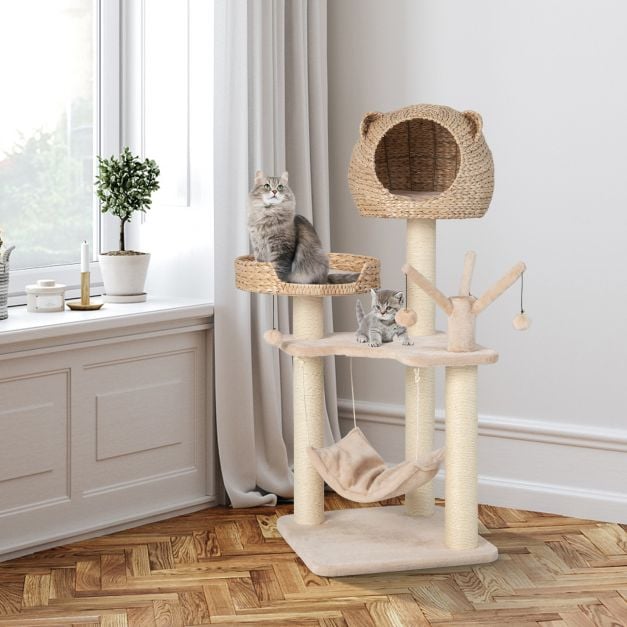
A cat tree is basically a “high-traffic zone” for your home: fur, dander, saliva, litter dust, food crumbs, and the occasional mystery stain all end up on the perches and in the condo. Regular cleaning keeps your cat healthier, reduces odours, and helps the cat tree last longer—especially if it includes plush perches/condos, scratch posts wrapped in sisal/jute, or wooden platforms (all common on modern cat towers).
What you’ll need (most homes already have this)
Core basics
• Vacuum with brush attachment (or handheld vacuum)
• Lint roller or rubber pet-hair brush
• Microfibre cloths
• Soft scrub brush/toothbrush (for corners and scratch posts)
• Mild dish soap
• White vinegar (optional, for odours)
• Baking soda (optional, for deodorising)
• Spray bottle
• A couple of towels
If your cat tree has removable cushions
• Enzyme cleaner (best for urine/vomit)
• Laundry bag (to protect fabrics in the wash)
What to avoid
• Bleach, ammonia, and harsh disinfectants (strong fumes, can irritate cats)
• Soaking sisal/jute posts (weakens fibres and glue)
• Steam cleaning glued seams (may loosen adhesives)
Step 1: Prep the area and make it cat-safe
1. Move the tree to a well-ventilated space if possible (near an open window).
2. Remove toys, cushions, and mats that detach.
3. Keep your cat away until surfaces are fully dry—cats love to re-claim damp territory by rubbing and shedding immediately.
Tip: If your cat hates change, put a favourite blanket nearby while you clean so they still feel “their scent” is present.
Step 2: Dry clean first (this is where most of the mess disappears)
Dry cleaning is the most important step—if you add water too early, you can turn dust + hair into a paste.
Vacuum top to bottom
• Start at the highest perch and work down.
• Use the brush tool on plush platforms, condos, and seams.
• For enclosed condos, angle the nozzle into corners and along inner edges.
If your cat tree includes multi-level perches/condos (very common), this top-down order prevents re-dirtying lower levels.
Remove hair that vacuuming misses
• Use a lint roller for quick wins.
• For heavy shedding, a slightly damp rubber brush lifts fur fast (don’t wet the tree—just the brush).
Step 3: Deodorise (optional, but great for “cat smell”)
If your tree smells musty (but you don’t have a specific stain to treat):
1. Lightly sprinkle baking soda on fabric areas (perches/condos).
2. Let it sit 15–30 minutes.
3. Vacuum thoroughly.
This is especially helpful on plush surfaces that hold odours—like padded perches and cosy condos.
Step 4: Spot-clean stains the right way
For general grime (food residue, paw prints)
Mix in a spray bottle:
• 2 cups warm water
• a few drops of mild dish soap
Lightly mist a cloth (not the tree), then blot and wipe.
For urine/vomit (anything biological)
Use an enzyme cleaner:
• Blot first (paper towel).
• Apply enzyme cleaner per label.
• Let it dwell long enough to break down odour compounds.
• Blot again and air-dry.
Important: Don’t “scrub hard” on plush—aggressive scrubbing can mat the fibres and make the area look worse.
Step 5: Clean by material (plush, wood, sisal/jute, metal)
Many cat towers combine materials—plush lounging areas, scratching posts, and wood/metal frames.
A) Plush fabric and carpeted platforms
• Use a damp (not wet) cloth with mild soapy water.
• Wipe, then follow with a clean damp cloth to “rinse.”
• Pat dry with a towel.
• Let air-dry completely.
If cushions are removable and washable, check the care tag. Some modern wooden cat trees include washable cushions, which makes deep cleaning easier.
B) Wooden platforms (and wood towers)
• Wipe with a microfibre cloth lightly dampened with soapy water.
• Immediately wipe again with a dry cloth.
• Avoid saturating joints/edges.
Wood cat trees often have multiple tiers and condos—water pooling in seams can lead to swelling or odour.
C) Sisal or jute scratching posts
This is the part people accidentally ruin.
Do this:
• Vacuum the post up and down.
• Use a dry toothbrush/soft brush to lift embedded fur.
• For a sticky spot: lightly dab with a cloth barely dampened with soapy water, then dab with plain water, then towel-dry.
Do NOT do this:
• Don’t soak the rope.
• Don’t spray heavily.
• Don’t use strong cleaners (they can linger and put your cat off scratching).
D) Metal frames or hardware
If your cat tree has a metal frame:
• Wipe with a slightly damp cloth, then dry.
• Check screws/bolts afterwards—cleaning is a good time to re-tighten for stability.
Step 6: Deep clean the condo interior
Condos can trap odours because airflow is low.
• Vacuum thoroughly.
• Wipe interior walls with a cloth lightly dampened with mild soapy water.
• Follow with a cloth dampened with plain water.
• Pat dry and leave the condo open to air out.
If odours persist, place a small bowl of baking soda near (not inside) the condo area for a day.
Step 7: Drying matters more than you think
A cat tree that’s “mostly dry” can still develop a musty smell.
Best practice:
• Let it dry overnight in a ventilated room.
• Use a fan if needed (not heat).
• Avoid direct high heat on plush and glued sections.
Only reassemble when everything feels dry to the touch.
A realistic cleaning schedule (for most homes)
• Daily/Every other day: quick lint roll of the top perch (30 seconds)
• Weekly: vacuum the whole tree (5–10 minutes)
• Monthly: spot-clean grime zones + deodorise
• Every 2–3 months: deeper clean (fabric wipe-down, condo interior, rope brushing)
• Immediately: enzyme-clean any urine/vomit
Multi-cat homes or allergy households may want to shift everything one step more frequent.
When cleaning isn’t enough (and it’s time to repair or replace)
Consider repair/replacement if:
• The scratching rope is frayed to the core (can snag claws)
• The base wobbles even after tightening screws
• Persistent urine odour remains after enzyme treatment
• Mold/mildew is present (safety issue)
Sometimes you can extend life by re-wrapping posts with new sisal rope and replacing cushions.